With the Spring season upon us, check of this information about the similarities and differences in symptoms of Covid-19 and seasonal allergies!

Thanks to Central Middle School nurse Loren Catrambone MEd, BSN, RN for creating this!
As we land back into March, many of us are feeling some form of COVID-19 fatigue. It’s been nearly one year of following rules, worrying about getting sick, feeling stressed when others get sick, reducing sociability, and having our routines completely disrupted. However, here we are one year later with some good news that should give us all a lift!
COVID-19 fatigue can make us want to disregard the rules, but it is important we continue to wear masks, wash our hands, and social distance from those who do not live in our home. Pandemics never last forever. We WILL get through this!
https://www.wbur.org/commonhealth/2020/03/09/coronavirus-cases-massachusetts-map
https://www.cdc.gov/coronavirus/2019-ncov/covid-data/covidview/index.html
https://www.wbur.org/commonhealth/2021/02/10/record-low-flu-rates-massachusetts
Reminders:
We are excited to welcome back our in-person students in
grades 1-3, 5 days/week when we return from the February vacation! A few things
you should consider in getting ready for school:
1. Masks - your student will need more masks. Please obtain a few more masks as we expect
children to be wearing a clean mask to school each day.
2. Water bottle - please make sure your student has
a water bottle, labelled with their name, in order to stay hydrated while at
school.
3. Symptom List - please continue to check your
child for symptoms daily. COVID-19 symptoms present like a cold in children. If
your child displays any symptoms and you think its “just a cold” you should
keep your child home, call your PCP and notify your school.
4. Physical Exam Reports Grade K and 4 - physical
exam reports are due. We are required by Massachusetts to have a recent (within
the last year) physical exam report from your PCP/ doctor on file for all
students in grade K and 4. If you were notified earlier this month that we are
missing this report please submit it, or a confirmation of a scheduled
appointment date with your doctor when we return.
5. Thank you to everyone who is part of our school
community- administration, staff, students, and parents. Working together,
masking, distancing, frequent handwashing and following travel guidelines while
enjoying time away will allow us to return to 5 days, in person learning as
safely as possible.
It is well understood that children seeing role models who
look like them gives them confidence to follow in their footsteps. This was
made very clear after the inauguration of Vice President Kamala Harris and the
poetry reading by youth poet laureate Amanda Gorman when girls all over the
country shared their feelings about feeling inspired, included, and more
visible. As we celebrate Black History Month in our schools, the nurses welcome
the opportunity to honor the diverse women who have contributed to the nursing
profession in America. Our hope is that every child we interact with will
follow their dream and be inspired by amazing nurses such as Sojourner Truth,
Susie King Taylor, Betty Smith Williams, Mary Eliza Mahoney and Harriet Tubman.
These amazing women’s stories can be found at the following
link if families want to share them at home:
https://nurse.org/articles/black-history-month-nursing-leaders/

Massachusetts Department
of Public Health Guidelines
The Massachusetts Department of Public
Health has adopted the latest CDC quarantine guidelines for close contacts
(not positive cases) that include:

due to COVID-19.
COVID-19: Close Contacts
As we plan for the Thanksgiving holiday, the following considerations are offered to help keep our friends, families, and community safe during COVID-19. If you host a holiday celebration, keep it small. If you are considering travel, be aware of Massachusetts travel orders. If you participate in a celebration, follow public health guidance.

Lower
Risk Celebrations
·
Limit in-person holiday gatherings
to only people you live with or limit to a small group of individuals with whom
you are regularly in contact.
·
Keep visits short – gatherings that
last longer pose more risk than short gatherings.
·
Host a virtual holiday dinner
with extended family or friends, especially if they are at higher risk for
illness from COVID-19.
·
Prepare traditional family recipes
for family and neighbors, especially those at higher risk of severe illness
from COVID-19, and deliver them in a way that doesn’t involve contact with
others.
Higher
Risk Celebrations
If
you plan to celebrate the holidays in person with people you don’t live with:
Avoid
these activities:
DO NOT host or participate in any in-person festivities if
you or anyone in your household:
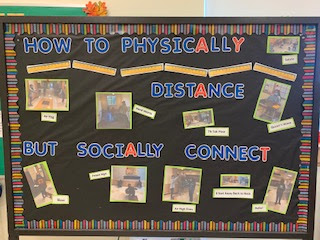
This bulletin board is on display for all the students to see at Central Middle School! It helps students connect socially while still maintaining a physical distance. Thanks for sharing, Mrs. Catrambone!
Shout out to Ms. Flynn, school nurse at Broad Meadows Middle School! She made this super creative info sheet including tips for a healthy school year! It includes a reminder to stay a Gilbert (Mr. Gilbert - Principal is 6 feet tall) apart!

All about masks!

The CDC recommends that
people wear masks in public settings, like on public and mass transportation,
at events and gatherings, and anywhere they will be around other people,
especially school. Masks may help prevent people who have COVID-19 from
spreading the virus to others.Masks are most likely to reduce the spread of
COVID-19 when they are widely used by people in public settings.
When wearing a mask, it
is important to select one that has two or more layers to help stop the spread
of Covid-19. Do not touch your mask when wearing it. If you must, make sure you
wash your hands after. Make sure you wear a
mask that covers your nose and mouth and is secure under your chin. It should fit
snugly against the sides of your face. Masks
should be washed regularly in the laundry.

If you wear a gaiter, it
must be two layers or folded over to make two layers to give you the best
protection. At this time, only a face shield is not recommended as
effectiveness is unknown. If you wear glasses, find a mask that fits closely
over your nose or one that has a nose wire to limit fogging. Masks with valves
are also not recommended.
To take off your mask, carefully untie the strings behind
your head or stretch the ear loops. You should handle the mask by the ear loops
or ties only. Fold the outside corners together. Be careful not to touch your
eyes, nose, and mouth when removing your mask. Wash your hands immediately after
removing the mask.
For more information, visit the CDC website at https://www.cdc.gov/coronavirus/2019-ncov/prevent-getting-sick/diy-cloth-face-coverings.html
Shout out to Mrs. Jordan, school nurse at Wollaston Elementary for creating this awesome bulletin board! This is on display for all students to see and be reminded how to wash their hands!


The following suggestions are offered for
families who want to participate in Halloween activities while limiting the
risk of exposure to COVID-19. As a reminder, any Halloween activities are
subject to the current state gathering
size limits.
Lower
Risk Activities:
·
Celebrate with members
of your household with a Halloween-themed meal, Halloween movie night, or by
preparing a Halloween scavenger hunt.
·
Hold virtual costume
contests or pumpkin carving events.
·
Decorate your yard for
others to enjoy from their car or while on a socially-distanced walk.
·
Enjoy Halloween outside rather than
attending indoor events.
·
Wear a face mask or
face covering.
- Do not use a costume mask as a substitute for
a face mask or face covering.
- Do not wear a costume mask over a cloth mask because
it can be dangerous if the costume mask makes it hard to breathe. Instead, consider using a Halloween-themed
cloth mask.
·
Carry hand sanitizer
(60% alcohol) and use it often, especially after coming into contact with
frequently touched surfaces and before eating candy.
·
Refrain from touching
your face.
·
Maintain social
distancing of at least 6 feet from people who are not members of your
household.
Moderate Risk Activities:
·
Visiting pumpkin
patches and orchards.
·
Having small group,
outdoor costume parade where people are distanced more than 6 feet apart.
·
One-way
trick-or-treating, with treats placed outside of the home for trick-or-treaters
as a “grab and go” while keeping distance from others.
·
Placing candy on a
platter instead of a bowl and leaving hand sanitizer out for trick-or-treaters
to use.
AVOID Higher Risk Activities:
·
Participating in
traditional trick-or-treating where treats are handed to children who go door
to door.
·
Attending crowded
costume parties held indoors, or any gatherings that exceed gathering limits.
·
Going to an indoor
haunted house where people may be crowded together and screaming.
· Going on hayrides or tractor rides with people who are not in your household.

STAY HOME AND REFRAIN From Halloween Activities,
Including Handing Out Halloween Treats, If:
· You feel unwell
· You have tested
positive for COVID-19
· You have been exposed
to someone with COVID-19
· You have traveled to or from a state that is not classified as lower risk within the last 14 days.
SWritten by: Kathleen Torraco, RN
For more information visit: https://www.cdc.gov/coronavirus/2019-ncov/daily-life-coping/holidays/halloween.html
F
This fun and inspiring bulletin board is on display at North Quincy High School for all students to see! Mrs. Houlihan did a great job reminding students just how great they are!


Who needs to quarantine?
People who have been in close contact with someone who has COVID-19
What to do if you are determined to be a close contact?
Stay home and monitor your health
This sign is on display for all students at Squantum School! The portable medical kit is used by Nurse Spillane to bring to the classrooms to assess students who might not be feeling well. This helps cut down on hallway traffic and exposures!

Although children are less likely to become sick with Covid-19, they can still become infected with the virus and spread it to others. Children can have mild to severe symptoms or can also be asymptomatic (have no symptoms).

Germs are not for sharing! This bulletin board is on display at Beechwood for all students to remember to wash their hands, cover their sneeze or cough and stay home if you are sick! Great job by the Beechwood School Nurse, Mrs. Cerone!

Pandemics can be stressful!
There are plenty of healthy ways to cope with stress!

Take care of your emotional health – share your experience
with someone you care about, meditate or write in a journal!
Take social media or news breaks – repeated reminders of bad
news are not good for your mental health.
Take care of your body – get plenty of sleep, try to eat
healthy, well-balanced meals, exercise
Make time for activities you enjoy to help you unwind – go for
a social distanced walk or read a book!
Connect with others – Zoom, FaceTime and Video Chats are a
great way to stay connected.
Knowing the facts about COVID-19 and stopping the spread of
rumors can help reduce stress and stigma.
For more information visit: https://www.cdc.gov/coronavirus/2019-ncov/daily-life-coping/share-facts.html
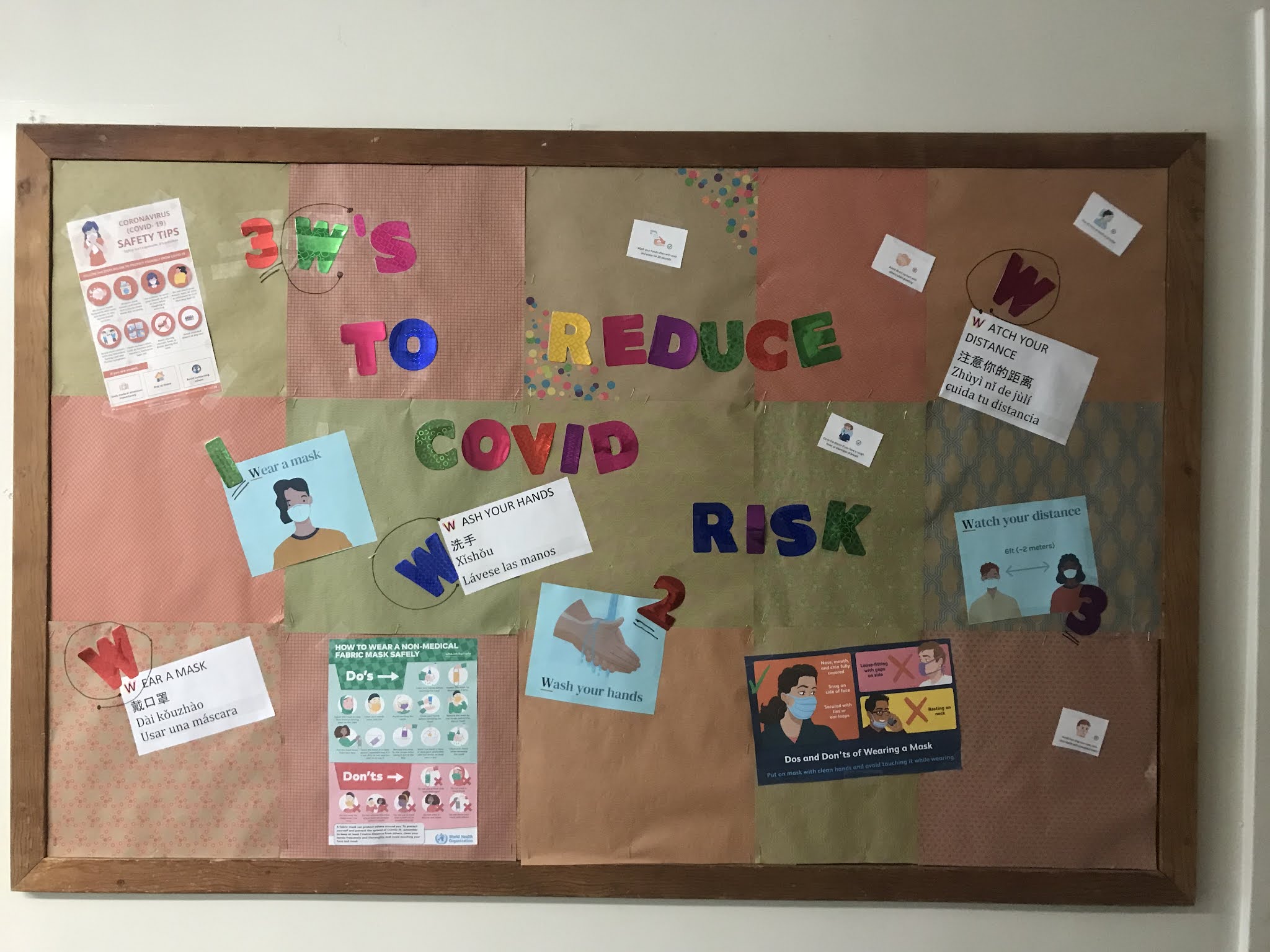
This awesome bulletin board is on display for all students at Atlantic to see. This helps remind students to follow the three W's: wear a mask, wash your hands and watch your distance!